
MENU
  • HOME
  • ABOUT
  • ARTICLES
  • FEATURED WEST VIRGINIANS
Beacon News West Virginia Logo

Pulling Back the Curtain on IVF and Surrogacy

Aug 24 2026 | By: Amy Thornton

Share


"All that glitters is not gold—
Often have you heard that told."

-William Shakespeare, The Merchant of Venice


The assisted reproductive technology (ART) known as in vitro fertilization (IVF) has been used in the United States for over forty years and surrogacy dates back to ancient times. For most considering these practices, there exists a pleasant image of a willing surrogate, a healthy pregnancy and visions of holding a baby in domestic bliss. A majority of Americans are in favor of using technology to produce children, inasmuch as the dilemmas in bioethics and morality remain misunderstood, unexplored or hidden from view.  


In Vitro Fertilization

Couples seeking treatment for infertility account for the majority of IVF cycles in the U.S., but there is a growing trend of same-sex couples and single individuals using both IVF and surrogacy, likely due to greater access. 

More than 40% of same-sex couples desire to raise children and research shows they prefer ART to adoption.  At a price tag of anywhere from $15,000 to $30,000 for one IVF cycle and $120,000 to $180,000 for contracting a surrogate, a "gestational carrier" as the industry prefers, there is a growing market for acquiring children using advanced technology partnered with a woman's womb.

According to Gallup polling, Americans are generally favorable toward the practice of IVF, but are divided on destroying the excess embryos the protocol necessitates.

Since the overturn of Roe v Wade, states are seeking more comprehensive definitions of when life begins. Proposed legislation around the nation has led to fresh questions scrutinizing the common practices within IVF and surrogacy. 

Some states are now recognizing "fetal personhood", granting legal protection for the unborn, defining life as beginning at conception.  Utah, Alabama, Louisiana and Missouri have the most stringent protections for human life at all stages of development, either by statute or judicial rulings.

Earlier this year, a pro-life group called Voice for the Voiceless sued seven fertility clinics in Utah, claiming their disposal of embryos within the IVF process violates the state’s wrongful death law. In Indiana and Ohio, courts are deciding if frozen embryos are human beings or merely property with regard to former partners disagreeing on what to do with the embryos now that their relationship has ended.

Thousands of babies are born through in vitro fertilization in a single year in the United States, according to the Society for Assisted Reproductive Technology (SART) President Dr. Jennifer Eaton:

 “More than 100,000 babies born through IVF in a single year is a powerful reminder of how many families rely on reproductive medicine to build their families,...these data also reflect the progress the field has made in improving accessibility, effectiveness, and safety.” 

As the practice of IVF and surrogacy is on the rise in the U.S., so too does the need to evaluate bioethical and moral considerations in the controversial practice of discarding and freezing human embryos. It's an astonishing reality, particularly for some Christians, who view this treatment of human beings as barbaric and mankind's attempt to "play God".

G.K. Chesterton, one of the most influential Christian apologists and prolific writers of the last century was deeply skeptical of advancing technology in the absence of morality.

“To have a right to do a thing is not at all the same as to be right in doing it." -G.K. Chesterton, A Short History of England (1917) 

"Chesterton always remained skeptical of humanity’s ability to keep up with the pace of modern inventions. He constantly reminded his readers that just because something can be done, does not mean it should be done. His skepticism about unbridled scientism prompted him to oppose the then-popular theories of eugenics."  - Gregory Soderberg, Do New Inventions Kill Old Liberties?

Through research in an ethics class during his doctorate program, Orthodox priest, Fr. Joseph Hazar, discusses the concerns of IVF and surrogacy within the scope of Christian morality.  Foundational to Christianity is the belief that marriage is between one man and one woman. This reality presents the dilemma of a third party being involved in the reproductive act within holy matrimony using IVF and gestational or traditional surrogacy.

Whether a couple uses their own donated eggs and sperm or anonymous donors, these living gametes are now being manipulated by outside parties away from the intimate act of reproduction.  And in the case of anonymous donors, a child is being set up for a possible identity crisis by the deliberate concealment of clear lineage and relationship.


As highlighted in Fr. Hazar's research, Surrogate Motherhood, "The more one brings the act of reproduction within the intimacy of the marriage bed, the less one falls short of the mark by preserving the union in one flesh of husband and wife." - Dr. Engelhardt, The Foundations of Christian Bioethics

Do couples unable to bear children consider that this is the will of God? That, perhaps infertility does not have to necessitate grief and external manipulation, but rather provides an opportunity for acceptance that all things come down from Him? 

With so many orphans in need of a loving home, are these children considered something less than biological offspring?  Do the desires of a couple, a single person or those in a same-sex relationship take precedence over the interests of a child produced by technology coupled with a human womb?

Should children be purposely denied the gift of both mother and father?

These are some of the penetrating questions for an age moving full throttle into unmitigated exploration of innovation at the expense of morality and bioethics. The soul of mankind is ignored and possibly damned through the blind consumption of advanced science without ever asking, should we be doing this?


Surrogacy

West Virginia does not have an explicit law like Missouri which states that life begins at conception, but rather a related statute in the Unborn Child Protection Act, passed in 2022 which defines embryos as "the developing human from the time of fertilization until the end of the eighth week of gestation." 

But would this law be enough to protect the unborn in the case of a surrogate being required to abort the baby she is carrying?  Would it serve the legal interests of creating a complex surrogate contract? 

Since West Virginia does not have a single comprehensive framework with regard to surrogacy agreements, a permissive approach may favor the mission of those seeking to capitalize on the market. 

There's an idyllic notion surrounding surrogacy that it is an inherently benevolent and selfless gesture to help another person unable to have biological children.  Indeed, this idea was expressed tenderly in a recent interview conducted by child advocate, Lila Rose, with surrogate mother, McKenna West.

West is now at the center of national media attention because what began as an expression of goodwill and legal contract took an unexpected turn when the intended parents demanded she have an abortion following a serious, but treatable, heart condition for the baby boy she was carrying.
 
The surrogate mother did not want to have an abortion and offered to adopt the unwanted baby, but the purchasing parents refused.  West then fled to Texas where she connected with a hospital and doctors who could treat the baby's heart condition, boasting a high success rate for the procedure. 

The baby was born and is currently having the necessary operations for treatment, but the surrogate mother has been banned from seeing the child she carried and sacrificed to protect. Now, unbelievably, the purchasing parents who wanted her to abort the baby are suing her for more than $100,000 for breaking the deal and unspecified damages.

The case highlights issues of parental rights, surrogacy agreements with abortion clauses, and medical decisions for the unborn. It may be tempting to believe this is an isolated case but that may be a misconception due to underreporting in mainstream media. 

Some cases point to eugenics and human trafficking.

In 2015, surrogate mother, Brittanyrose Torres was carrying triplets. The New York Post reported that the intended parents asked her to undergo a selective abortion on the female fetus, to reduce the risk of medical complications. She refused. Torres reportedly signed a contract for at least $30,000. 

She was initially implanted with two fertilized eggs, but one split in half and all three-- two male and one female continued to develop. The surrogate offered to adopt the baby the intended parents wanted to terminate, but was reminded that the contract gave them the right to decide on an abortion.

Just last month, a same-sex couple from Canada brought a legal suit against the "woman who carried their now two year old son because she refused to abort the fetus because of a minor defect and a cleft-lip." - Chris Nessi, NY Post, July 14, 2026 

In an article appearing in the Wall Street Journal from December, 2025, writer Katherine Long asserts that surrogacy is a booming multi-billion dollar industry that is largely unregulated and leaving surrogates with little financial and legal protections. She highlights multiple cases including several disturbing scenarios in which the surrogate surrendered the newborn baby soon after delivery to an unknown third party. 

Babycoming Inc. is one such company that specializes in consulting for international clients, particularly Chinese-speaking intended parents.  According to Long's article, Babycoming Inc. operates with power of attorney documents to pick up newborn infants on behalf of international intended parents and facilitates their transit to the planned home.  

One case she reported left the surrogate with fears of human trafficking. 

"Mel Hazeltine signed on with Los Angeles Surrogacy in October 2023, agreed to carry a child for a Chinese-Canadian single father and delivered a healthy baby girl this March.

The next day, a woman Hazeltine had never met arrived at the hospital with a power of attorney letter and a nanny.  The woman described herself as the father’s agent, and told Hazeltine that the father had two other surrogate children, one a newborn and another on the way. She also said that the father lived in California, not Canada. None of that information had been disclosed to Hazeltine, she said. “I just feel like so much was concealed from me,” she said.

Los Angeles Surrogacy didn’t respond to requests for comment.

Worried about human trafficking, Hazeltine ultimately reached out to the FBI and said she was interviewed by an agent. Two other surrogates who said the babies they carried were picked up by strangers also spoke to federal law enforcement, though the status of those investigations is unclear.

Federal law-enforcement officials didn’t respond to a request for comment." -Katherine Long, Wall Street Journal, Surrogacy is a Multibillion-Dollar Business- but Surrogates Can Be Left With Big Debts


With babies being treated as commodities, women's wombs being rented at costly price tags and subject to legal contracts that disregard the emotional, moral and spiritual element of a human being, it's a window into a world where humanity takes a backseat to the desires of consumerism.  There is no space to even consider the natural bonding in utero that takes place between a mother and her developing baby in this two-dimensional dystopia. 

"No doubt, bonding occurs while the child is in his mother's womb.  This is bonding that does not occur between biological mother and child in a surrogate arrangement, but by the child and a stranger.  ...Surrogacy involves the violation of the profound emotional and spiritual intimacy that is established between mother and child already during the pregnancy.  The surrogate will most likely form a bond with the child in her womb.  If she does not, one might question how the child will develop in utero, growing in a womb with no love." -Fr. Joseph Hazar, Surrogate Motherhood


West Virginia

Legal cases surrounding surrogacy have already made inroads in West Virginia.  In 2019, when a twelve year relationship producing four children using ART came to an end, a legal suit was brought,  S.U. v C.J. 18-0566. , to determine who the legal parent should be. The children were conceived by non-traditional methods, including IVF with ova harvested and stored by S.U., listed as female on his birth certificate.

C.J. carried the pregnancies and S.U. claimed the parties had entered a 2005 custody arrangement whereby C.J. would serve as the gestational surrogate for the three youngest children and would not assert custody or parental rights over them. 

S.U. sought to have C.J. removed from the children's birth certificates and to establish himself as the sole legal parent based on that purported surrogacy agreement. 

The family court's ruling in Mason County rejected S.U.'s claims, finding that there was no valid, enforceable gestational surrogacy agreement between the two parties and under WV Code §16-5-10(e), the woman who gives birth to a child is presumed to be the legal mother unless otherwise provided by law or determined by a court prior to the filing of the birth certificate.  

The WV Supreme Court of Appeals later affirmed this decision by the family court.


Marketing

West Virginia is considered a surrogate friendly state, according to one of the marketing arms of ART, SurrogateFirst, a national agency. They claim to guide intended parents or gestational carriers through the legal, medical and emotional process, helping to secure Pre-Birth Orders (PBO) and guide prospective surrogates through the process. 



SurrogateFirst offers legal guidance, providing attorney contact information and locations for surrogacy centers: 
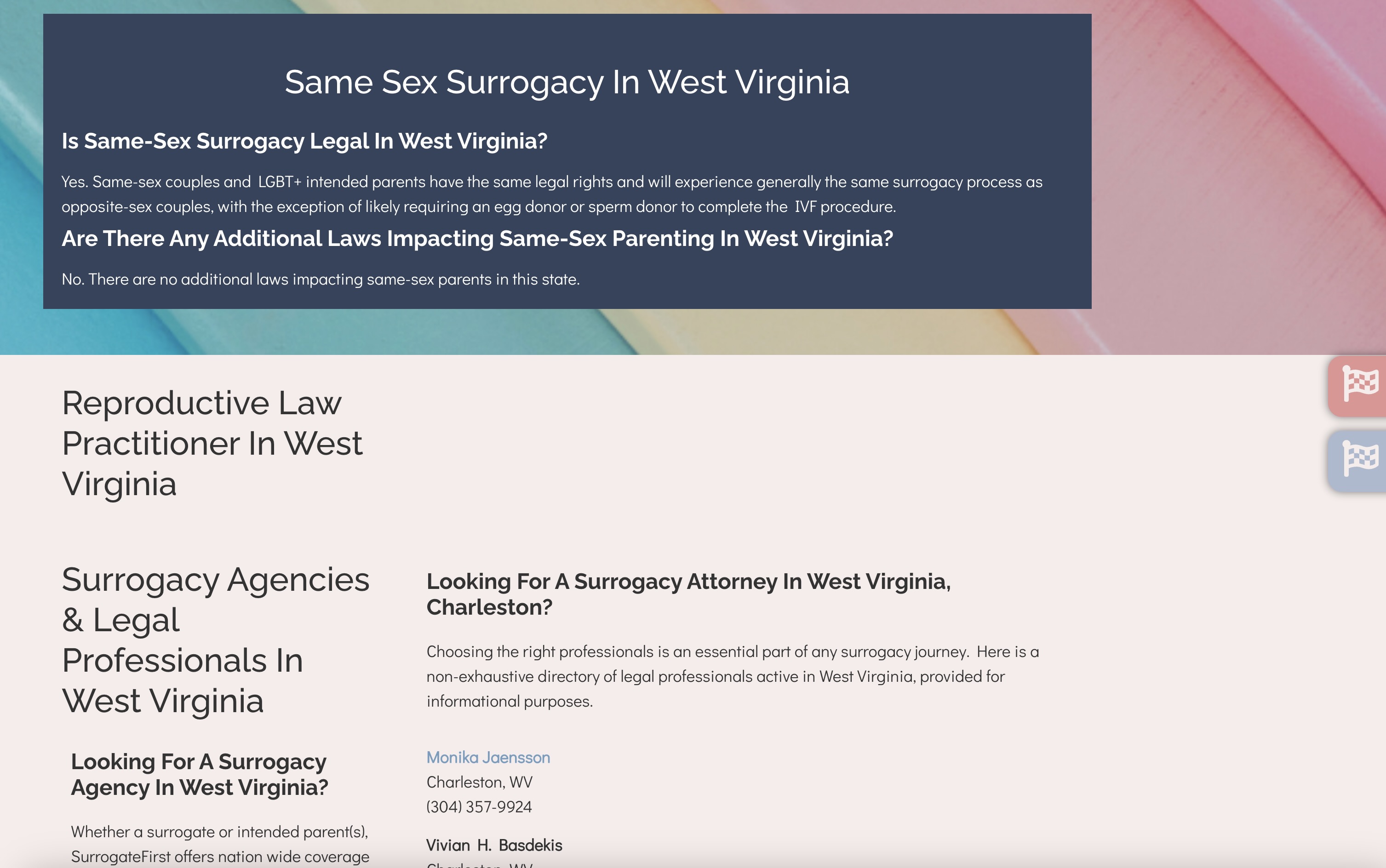


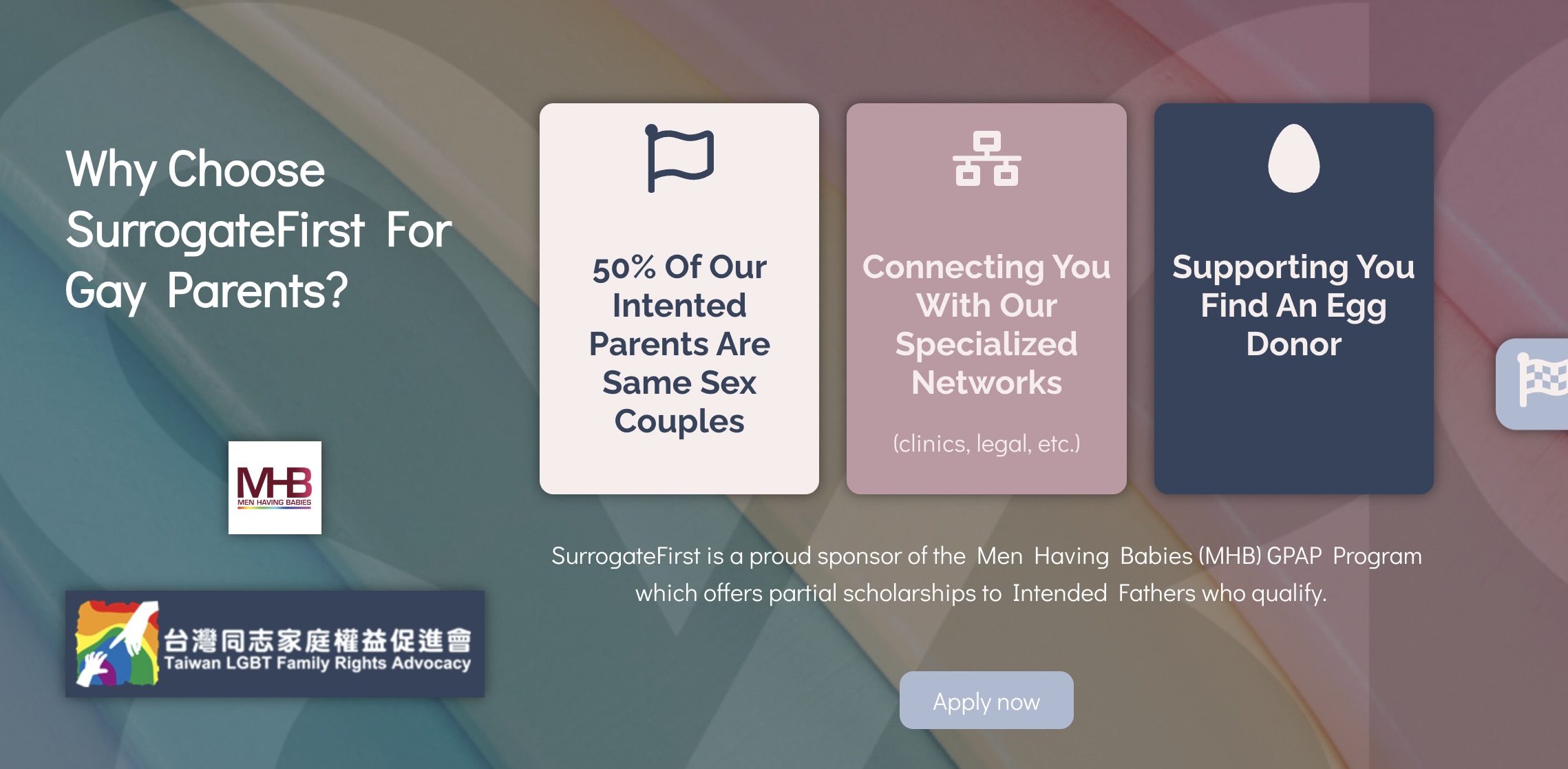
SurrogateFirst claims that 50% of their intended parents are same-sex couples, proudly supporting Men Having Babies, an organization dedicated to helping gay men and same-sex couples to acquire infants through gestational surrogacy. 


With West Virginia continually working to help thousands of children in foster care under a struggling CPS program, the state has multitudes of vulnerable children to protect. A growing and potentially nefarious billion-dollar industry may find the permissive laws surrounding surrogacy an ideal landscape to target.

Previous Post

Related Posts

Fayetteville Town Council Meeting Recap

August 21, 2026

Betrayal to Fayette County

August 1, 2026

Fayette County BOE uses Billboards to Promote Public Education

July 30, 2026

Fayette County Board of Education Swears in New Members

July 6, 2026

Archive

2026 Jan Feb Mar May Jun Jul Aug
2025 Jan Mar Apr May Jun Aug Sep Oct Nov Dec
2024 Jan Feb Mar Apr May Jun Jul Aug Sep Oct Nov
2023 Feb Mar May Jun Jul Aug Sep Oct Nov Dec
2022 Mar Apr May Jun Jul Aug Oct Nov Dec

Tags

NAVIGATE

HOME ABOUT ARTICLES FEATURED WEST VIRGINIANS  

CONTACT US

Email: Beacon News West Virginia  
Crafted by Zibster
CLOSE
  • HOME
  • ABOUT
  • ARTICLES
  • FEATURED WEST VIRGINIANS